Mozambique Gas Revenue Forecast 2027 to 2029, About 80 Million Dollars a Year While the Big LNG Plants Are Built
Mozambique hosts some of the largest gas projects in Africa, worth around 50 billion dollars between them. Its government expects to earn 80.1 million dollars from gas in 2027. That figure comes from the Medium-Term Fiscal Framework for 2027 to 2029, approved by the Council of Ministers in August 2026 and reported by Lusa. It falls slightly, to 78.4 million, in 2028, and rises to 101 million in 2029.
For a country of about 35 million people, that is small money. It is also the honest number, and it explains a lot about the politics in Cabo Delgado.
Why so little, so far
Only one project is exporting: Eni's floating Coral Sul platform, which has been producing offshore since 2022 (the gas projects). Its partners are still recovering their costs, so the state's share is modest.
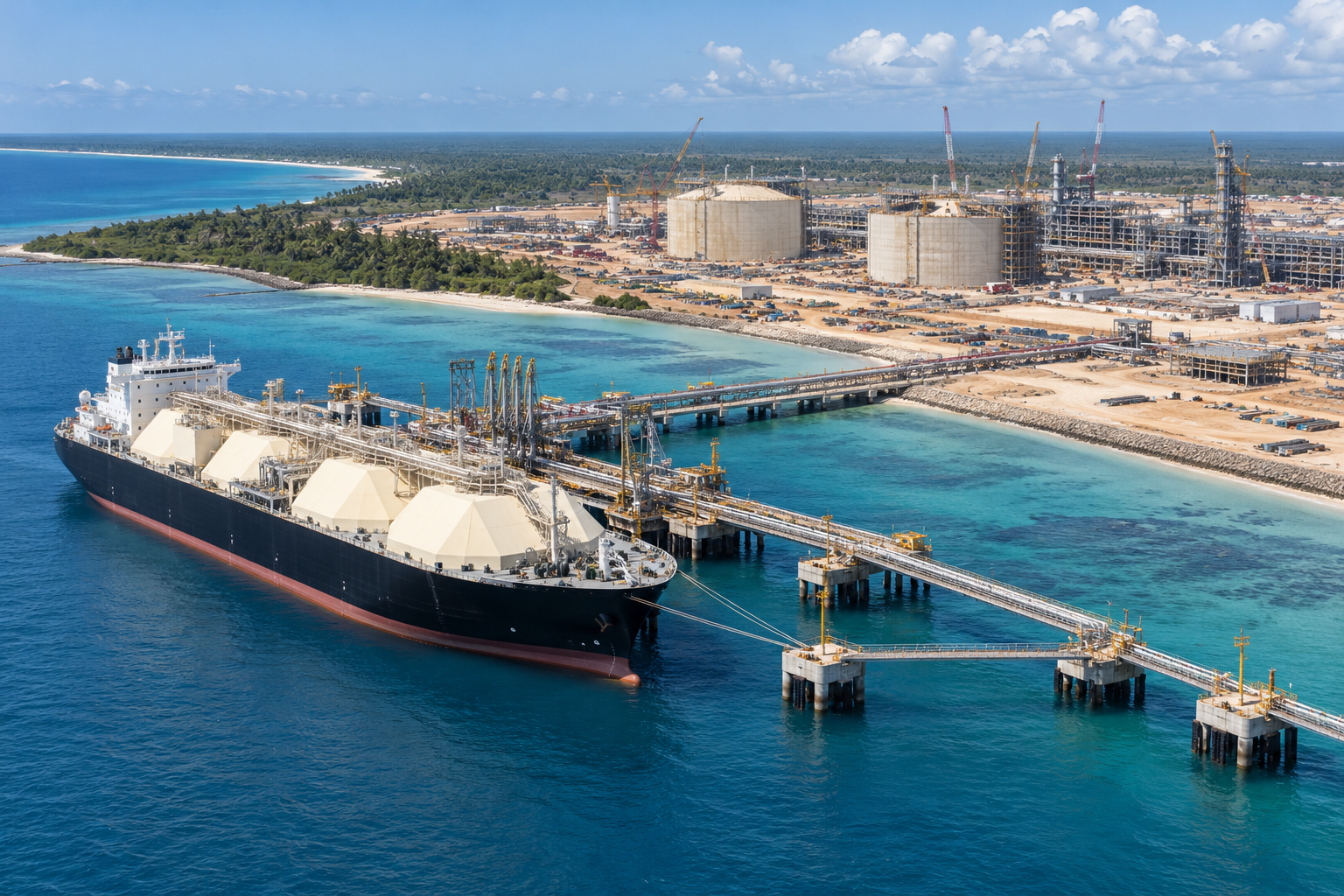
Image: pxef.com
The big money depends on three projects that are not producing yet. Coral Norte, Eni's second floating plant, costs 7.2 billion dollars and should start in 2028, doubling offshore output to about 7 million tonnes a year. TotalEnergies' Mozambique LNG, the 20-billion-dollar onshore plant at Afungi restarted in January 2026, targets first cargoes in the last quarter of 2029 (the restart). ExxonMobil's Rovuma LNG, the largest of all, still has no final investment decision. President Daniel Chapo had hoped for one by September; in August ExxonMobil said only that it was working on the steps "needed to secure the FID", and the decision is now expected later in 2026, with first gas around 2030 or 2031.
Even once the plants run, the state earns little at first. The companies recover their capital costs before the profit gas is shared. The government's long-range hope, about 6 billion dollars a year, is a 2040s number (the sovereign wealth fund).
Where the money goes
By law, 40 percent of gas revenue goes into the sovereign wealth fund and 60 percent to the state budget. On the 2027 forecast that means about 48.1 million dollars for the budget, about 0.7 percent of projected state revenue.
The budget earmarks that money for named projects, mostly roads, bridges and power lines. Spending it is another matter. According to budget execution data reported by Carta de Moçambique, the government spent 44 percent of the gas-funded allocation in 2025 and about 37 percent in the first half of 2026. Unspent money and slow projects are a familiar Mozambican problem. In a province where the insurgency recruits on the belief that the gas benefits everyone except the people who live next to it (the insurgency explained), they are also a security problem.
What the forecast admits
The Finance Ministry's own framework says the figures depend on world gas prices, on the projects keeping to schedule, and on security in Cabo Delgado. That is the right list. Mozambique LNG has already slipped by more than four years once. Public debt is forecast to fall from 72.2 percent of GDP in 2025 to 67.1 percent in 2029, which assumes the gas arrives roughly on time.
For Pemba the lesson is simple. The boom in the city now is construction money and contractor spending, not state revenue (local suppliers). The state's gas income starts to matter at the end of the decade, if the plants are finished and the war doesn't stop them again.