Cabo Delgado Insurgency Explained, Nine Years of War in the Gas Province of Mozambique
In the early hours of 5 October 2017, about thirty armed men attacked three police stations in Mocímboa da Praia, a port town in the north of Cabo Delgado. It looked like a local outbreak. Nine years later the war it started has killed more than 6,600 people, at least 2,700 of them civilians, according to the conflict monitor ACLED, and at its peak drove close to a million people from their homes. It shut down Africa's largest private investment for more than four years. Pemba, the provincial capital, became the place where the displaced arrived, the aid agencies set up and the soldiers passed through.
Who the insurgents are
Locals call them "al-Shabaab", the youth, though they have no organisational link to the Somali group of that name. The movement grew out of a radical Islamist sect, Ansar al-Sunna, that had clashed with established Muslim leaders in the coastal districts since the mid-2010s. It pledged loyalty to the Islamic State, which began claiming its attacks in 2019 and in May 2022 named it a separate "province": Islamic State Mozambique Province.
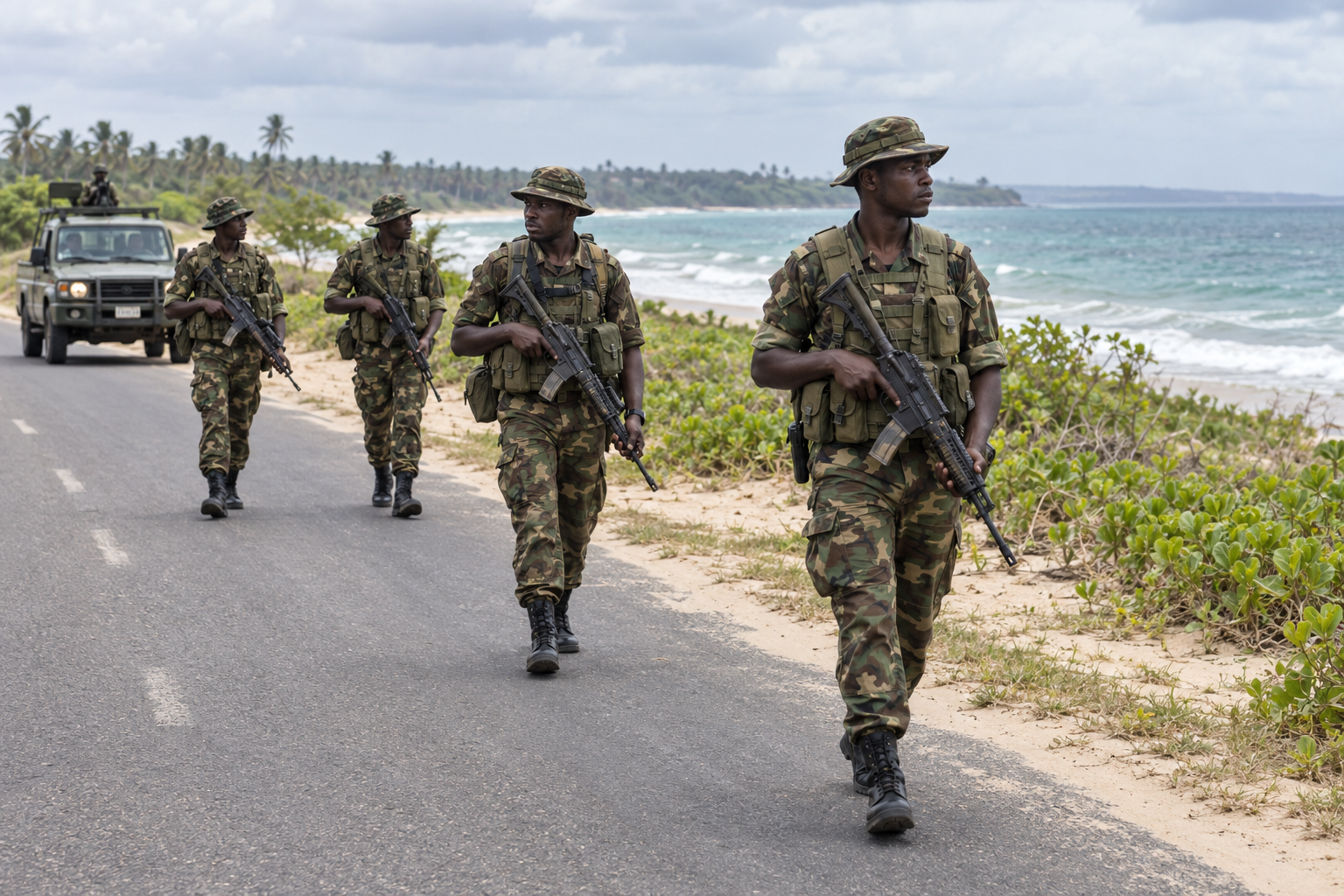
Image: pxef.com
Ideology explains part of it. Grievance explains more. Cabo Delgado is one of Mozambique's poorest provinces and among its most neglected, a long way from Maputo and the ruling Frelimo party's southern heartland. Young men watched ruby mines at Montepuez, graphite at Balama and then the gas projects arrive, and saw few of the jobs. Land was taken for the gas site at Afungi. The insurgents recruited on that anger, and on the abuses of Mozambique's own police and army.
From raids to the fall of Palma
For three years the attacks were brutal and small: villages burned, beheadings, ambushes on roads. The army struggled, and the government brought in mercenaries, first Russia's Wagner Group in 2019, which left after heavy losses, then a South African company. In August 2020 the insurgents captured Mocímboa da Praia and held it for a year.
On 24 March 2021 they attacked Palma, a town of tens of thousands next to the TotalEnergies gas site. The fighting lasted days; civilians and foreign contractors were killed, and thousands fled by boat and on foot, many to Pemba. TotalEnergies withdrew and declared force majeure (the gas project's story).
Rwanda's war
In July 2021, at President Filipe Nyusi's request, Rwanda sent about 1,000 soldiers and police; the force later grew to several thousand. A month later they retook Mocímboa da Praia. A Southern African Development Community force, SAMIM, deployed in other districts from 2021 and left in July 2024. Rwanda stayed, and became the backbone of security in the gas zone around Palma and Mocímboa.
The arrangement has a price, and it nearly broke in 2026. The EU had helped pay for the Rwandan deployment. In March 2026, after reports that Brussels would not renew the money, Rwanda's foreign minister said its troops would leave unless sustainable funding was guaranteed. In May he said Mozambique's government had secured the money and would keep paying; Maputo didn't publish the terms. Rwanda's role in eastern Congo, where it backs the M23 rebels, makes European funding politically awkward, and Kigali's leverage over Mozambique is now considerable.
The war in 2026
The insurgency is weaker than at its 2021 peak but far from beaten. It no longer holds towns. Instead it raids, extorts and kidnaps; ACLED found that kidnappings for ransom quadrupled in 2025, and roadside bombs became a regular weapon in 2026, including against Rwandan patrols near Mocímboa da Praia. In 2026 the fighters spent long stretches in the southern districts of Chiúre, Ancuabe and Quissanga, closer to Pemba, looting villages and taking over artisanal mining sites, before returning north to Macomia. More than 26,000 people were displaced in the first half of 2026, and about 900,000 people in the province needed humanitarian aid, of whom only half were getting it.
Pemba city itself has not been attacked. But the war is the backdrop to everything that happens there, from hotel occupancy to the cost of insurance and the camps for displaced families on the city's edge (is Pemba safe?).
The insurgents' cause has little support. The conditions that recruited for them haven't gone away.