Is Pemba Safe in 2026, What Governments Advise and What the Security Picture Looks Like
Pemba is the capital of a province at war, and it is also a functioning port city where oil and gas contractors, aid workers, officials and a few tourists come and go every day. Both things are true. The question for anyone planning a trip is where the line between them runs, and that line has moved several times since 2017.
What governments say, as of October 2026
The British government's travel advice, still current on 15 October 2026, advises against all travel to Cabo Delgado province except for Palma town and the area around Pemba and Afungi, where it advises against all but essential travel. In plain terms: Pemba is in the safer category, but London still doesn't think you should go unless you need to.
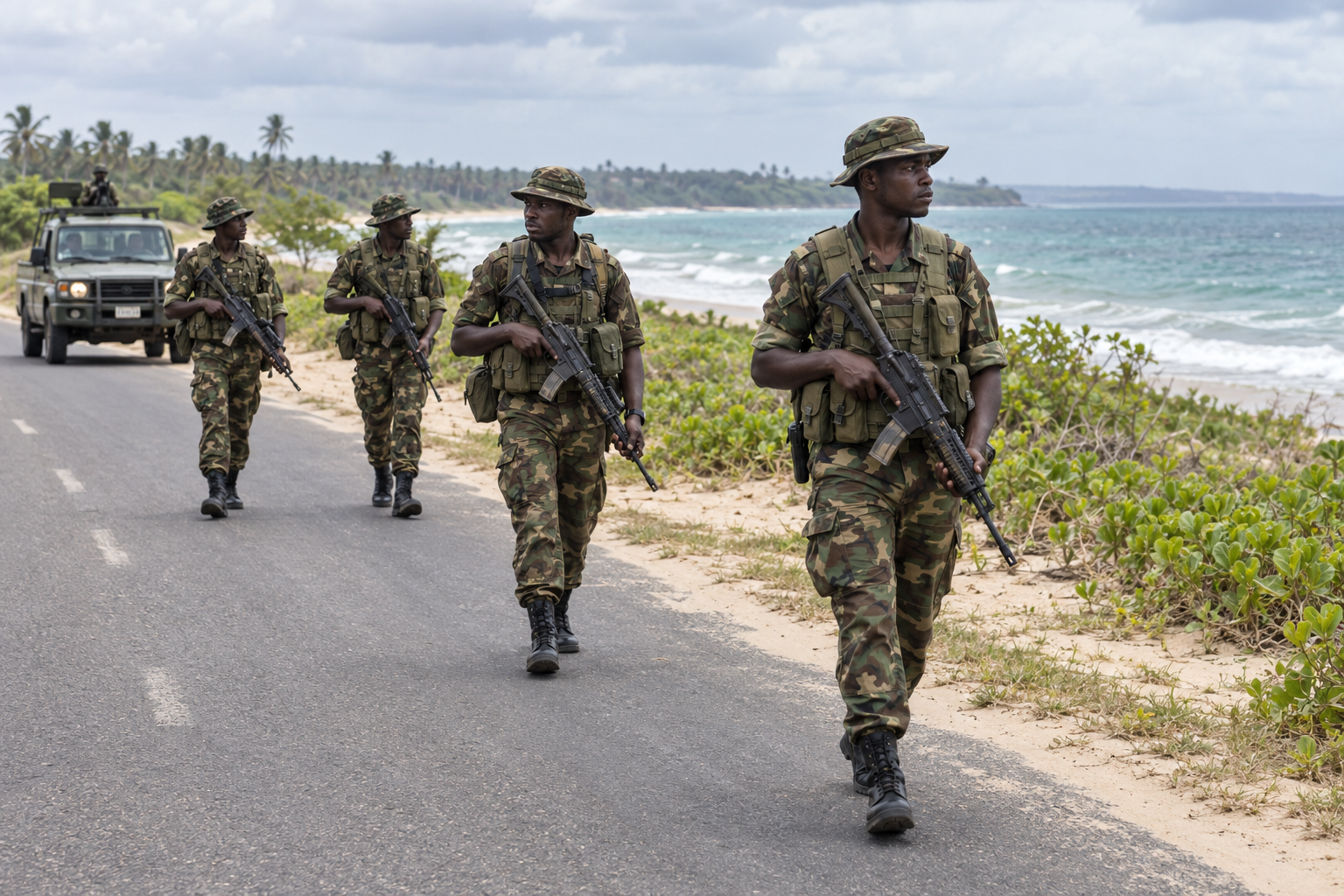
Image: pxef.com
The US State Department rates Mozambique as a whole at its lowest warning level but tells Americans to reconsider travel to the northern districts of Mocímboa da Praia, Nangade, Palma, Macomia and Quissanga because of violent extremism. It suggests that anyone working in the affected areas hire a professional security company.
The practical effect matters as much as the wording: travel insurance often won't cover an area a government advises against visiting, and companies sending staff to Cabo Delgado usually need their own security plan.
The security picture
The insurgency (explained here) has not attacked Pemba city itself. The fighting has been in the districts to the north, west and, increasingly in 2025 and 2026, south of it: Macomia, Mocímboa da Praia, Muidumbe, Nangade, and the southern districts of Chiúre, Ancuabe and Quissanga, where insurgents spent long stretches of 2026 looting villages and kidnapping for ransom. Kidnappings quadrupled in 2025, according to the conflict monitor ACLED, and roadside bombs became a regular weapon in 2026.
Inside the city, the risks are the ones of any poor, crowded port town that has absorbed tens of thousands of displaced people: petty crime, robbery after dark, and police and army checkpoints where documents are checked. There's a heavy security presence. Foreign business visitors usually stay in the established hotels and lodges along Wimbe Beach and in the city centre (hotels and restaurants), move by arranged transport, and avoid walking at night.
Getting out of town
The bigger risk starts when you leave. The main road north, the N380 towards Macomia, Mocímboa da Praia and Palma, runs through the districts where most attacks happen. Ambushes on vehicles and convoys have been a feature of the war, and in 2026 bombs were planted on roads used by Rwandan patrols. Most companies working at Afungi fly their staff, through Pemba airport and the project's own airstrip, rather than drive (getting to Pemba).
Roads south towards Nampula and west towards Montepuez carry less risk but are not free of it, especially since the insurgents' push into the southern districts in 2026. Insurgents have raided coastal villages and some islands of the Quirimbas, north of Pemba, during the war; the islands are reached by boat or light aircraft (the Quirimbas).
Practical precautions
If you need to go, a few rules of thumb apply. Register with your embassy. Check your insurance covers the province. Use known hotels and drivers, and agree routes in advance. Carry your passport or a certified copy at checkpoints. Keep a low profile and stay current: the security picture can change in a week, and local news, the Club of Mozambique and Portuguese-language outlets such as Lusa report it first.
Pemba is not a war zone. It is the edge of one, and that is the right way to plan for it.