Rovuma LNG, Coral South and Coral North, the Three Gas Projects Behind the Cabo Delgado Boom
Mozambique sits on some of the largest gas discoveries made anywhere this century. Between 2010 and 2013, drilling in the Rovuma Basin off Cabo Delgado found well over 100 trillion cubic feet of gas in two blocks, Area 1 and Area 4. More than a decade later, one project is producing, one is under construction and one is still waiting for its final investment decision. Together they decide whether Cabo Delgado, and Pemba with it, becomes a gas economy.
TotalEnergies' onshore plant in Area 1, Mozambique LNG, gets its own post (the restart). This one covers the Area 4 projects, run by Eni and ExxonMobil.
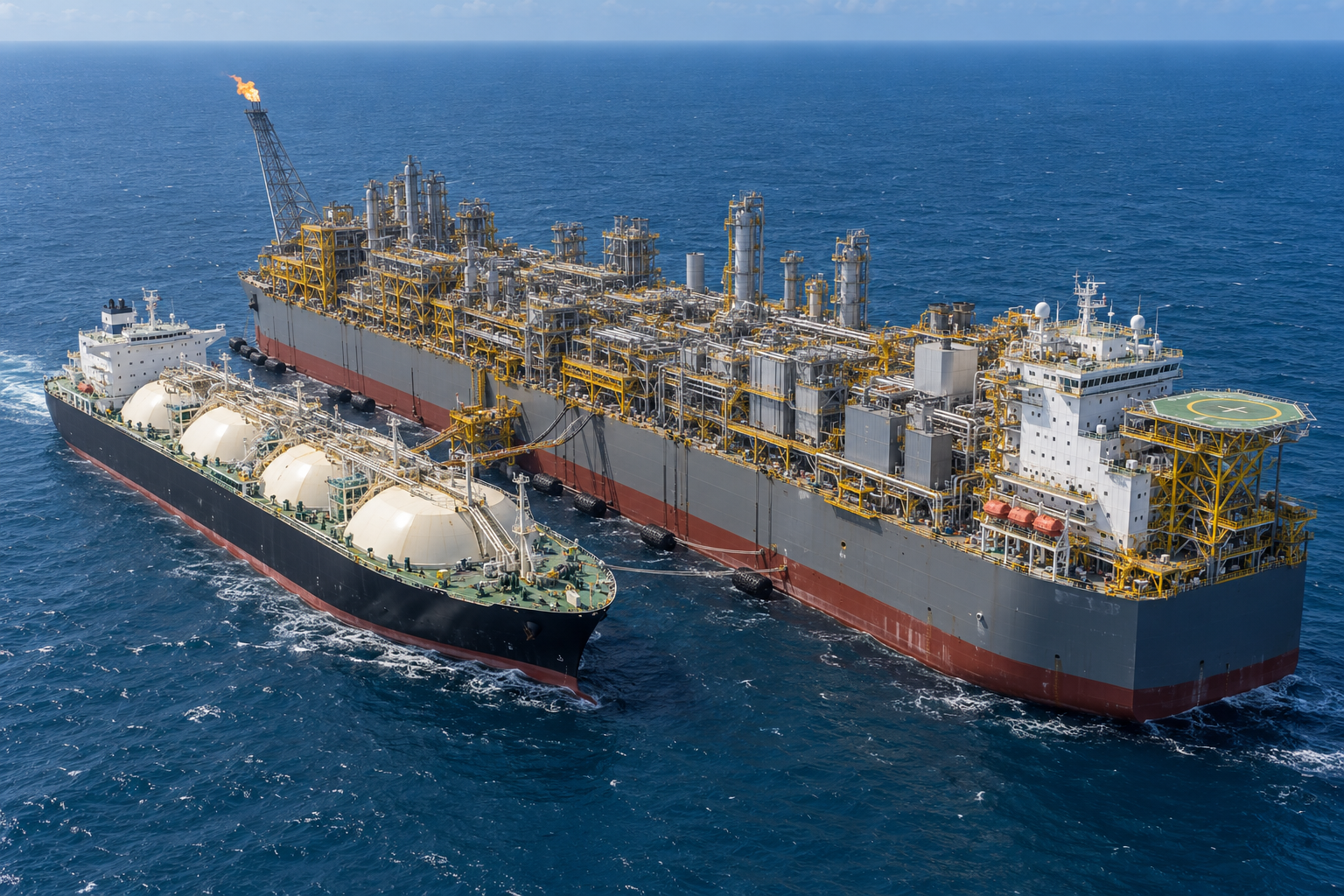
Image: pxef.com
Coral South, already exporting
The first Mozambican gas left the country by sea, from a ship. Coral Sul, a floating liquefaction vessel built in South Korea, is moored about 50 kilometres off the coast above the Coral field in Area 4. Eni operates it. It began production in late 2022, while the onshore projects were frozen; far out at sea, it was out of the insurgents' reach. Its capacity is about 3.4 million tonnes a year, and by April 2025 it had shipped its hundredth cargo.
Its sister is on the way. In October 2025 Eni and its partners took the investment decision on Coral North, a second floating plant costing about 7.2 billion dollars, due from 2028. It should roughly double Mozambique's floating output to about 7 million tonnes a year.
Rovuma LNG, the giant still waiting
The biggest prize is ExxonMobil's Rovuma LNG, an onshore plant on the Afungi peninsula next to TotalEnergies' site, sharing some of its infrastructure. As planned in 2026, it has 12 small liquefaction trains with a combined capacity of about 18 million tonnes a year, at a cost Mozambican officials put at about 20 billion dollars. ExxonMobil leads it on behalf of the Area 4 partners: ENH, China's CNPC, Eni, South Korea's KOGAS and XRG.
The decision has slipped repeatedly. ExxonMobil lifted its own force majeure in November 2025. In July 2026 President Chapo said he hoped for a final investment decision by September; in August the presidency said ExxonMobil meant to take it "before the end of this year", and the company's chief executive said the same. In August ExxonMobil picked a consortium of Saipem, McDermott, Daewoo E&C and CPECC for the onshore construction, and in September a Saipem and Jan De Nul group for the offshore work. Start-up is planned for 2031.
As of late October 2026 the decision has not been announced.
What's at stake for Mozambique
If all three projects run at full capacity, Mozambique would export about 38 million tonnes of LNG a year, putting it among the world's larger exporters. For a country with one of the lowest incomes per head in the world, the revenue could be transformative. The government has set up a sovereign wealth fund to hold part of it.
The doubts are just as large. Mozambique's record with resource money is poor; the "hidden debts" scandal of 2016, in which state companies took about 2 billion dollars in secret loans linked to a tuna fleet and maritime security, pushed the country into default and lasting distrust with donors. The insurgency grew in Cabo Delgado in part from grievances over land, jobs and the sense that the province's wealth (rubies, graphite, timber and now gas) was flowing elsewhere. A gas boom that bypasses local people would feed the same anger.
Then there's demand. Europe wants gas that doesn't come from Russia or through the Strait of Hormuz (hormuz.net), and Asian buyers sign long contracts. But a wave of new LNG from the United States and Qatar is due before Rovuma LNG would start, and prices could be lower than the planners assumed.
The view from Pemba
None of the plants is in Pemba, but the city is where the projects touch the province: the port, the airport, the bank branches, the hotels, the supplier offices (how local firms get in). A positive decision on Rovuma LNG would bring a second construction workforce to the Afungi peninsula, and much of its supply chain would run through Pemba Bay.
Until ExxonMobil signs, the city is planning for one gas project and hoping for two.