Pemba Island, the Green Island of Zanzibar, Its Politics, Its Ruins and How to Get There
There is a second Pemba, and for many people searching the name, it's the one they mean. Pemba Island lies about 50 kilometres north of Unguja, the main island of Zanzibar, off the coast of Tanzania. Arab sailors called it al-Jazira al-Khadra, the Green Island, and it still is: hilly, wet and covered in clove trees, mango and coconut palms, with mangroves along a ragged coastline. About 543,000 people lived there at the 2022 census, on an island of 988 square kilometres.
Pemba is part of Zanzibar, which is part of Tanzania, and both of those relationships matter. The island is the heartland of Zanzibar's opposition and has been for three decades; some of the worst political violence of Zanzibar's multiparty era happened here (Pemba's opposition and the 2025 elections). It also grows most of Zanzibar's cloves, the islands' best-known export, though that trade is in trouble (Pemba's cloves). Tourism, which made Unguja rich, has barely touched it.
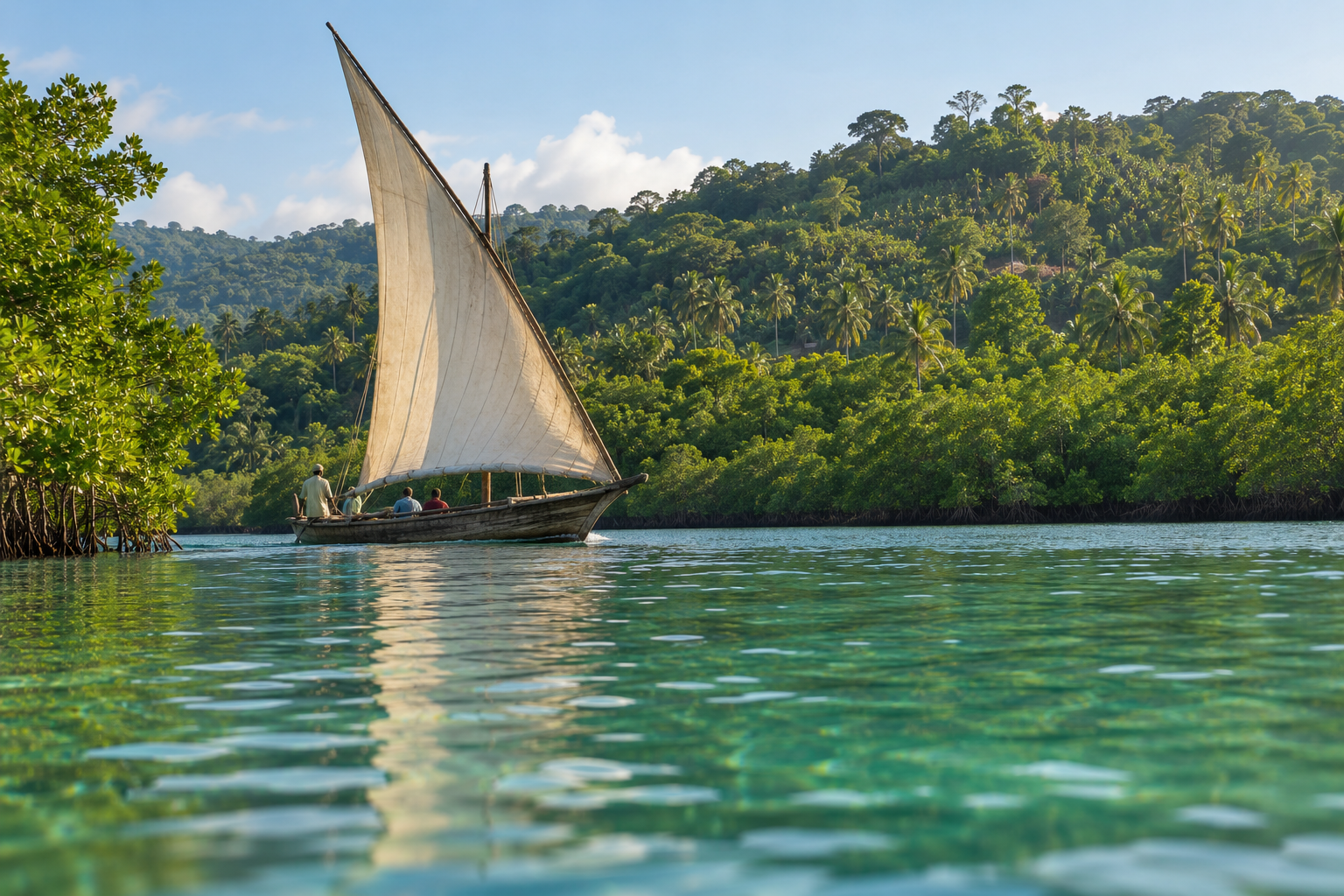
Image: pxef.com
Neglect and grievance
Pemba's people have long felt like the junior partner. The Zanzibar government sits in Zanzibar Town on Unguja, as do most of the jobs, the airport traffic and the tourist money. Pembans complain that their roads, schools and hospitals lag behind. Islanders also have a long memory of how the state has treated them, from the clove monopoly that kept farm prices low for decades to the police killings of opposition supporters in January 2001. Many Pembans see the union with mainland Tanzania, and the dominance of the ruling Chama Cha Mapinduzi (CCM) party, as arrangements that have rarely worked in their favour.
That's why Pemba votes the way it does, and why its elections are watched closely.
Towns and sights
The island has three main towns. Chake Chake, in the middle, is the capital and the nearest town to the airport. Wete, in the north, is the largest settlement and a clove-trading port. Mkoani, in the south, is the harbour for ferries from Unguja.
Pemba's ruins are older than most of Zanzibar Town. The Swahili ruins at Ras Mkumbuu, on a peninsula west of Chake Chake, include the Ndagoni ruins, probably from the 14th century and among the oldest well-preserved early ruins on the islands. At Pujini, south of the airport, the ruins of Mkama Ndume are the only known early fortification on the Swahili coast, from the 15th century. In the north-west, the Ngezi Forest reserve protects some of the island's last natural forest and the Pemba flying fox, a large fruit bat found only here.
Offshore, Misali Island, west of Chake Chake, is a small island ringed by coral reef inside a marine conservation area, and the deep Pemba Channel between the island and the mainland gives Pemba some of the best wall and drift diving in East Africa.
Getting there
The airport at Chake Chake, often called Karume or Wawi airport, has small-plane flights to Zanzibar Town, Dar es Salaam and Arusha. Fast ferries run from Zanzibar Town to Mkoani, but schedules and operators change often, so check before you travel. Visitors to Zanzibar need the same entry documents as for the rest of Tanzania, and Zanzibar charges its own compulsory travel insurance on arrival.
The two Pembas may soon be one short trip apart: booking sites list a new Pemba, Mozambique, to Dar es Salaam route on LAM Mozambique Airlines from late October 2026 (getting to Pemba, Mozambique).
Where to stay
Accommodation on Pemba is limited: a handful of small resorts and dive lodges on the coast, and simple guesthouses in the towns. That scarcity is the island's appeal for some visitors and its frustration for others. Book ahead, check that a place is operating, and expect a slower pace than on Unguja.
Pemba has been called the Zanzibar of thirty years ago. Its politics are part of the reason it stayed that way.